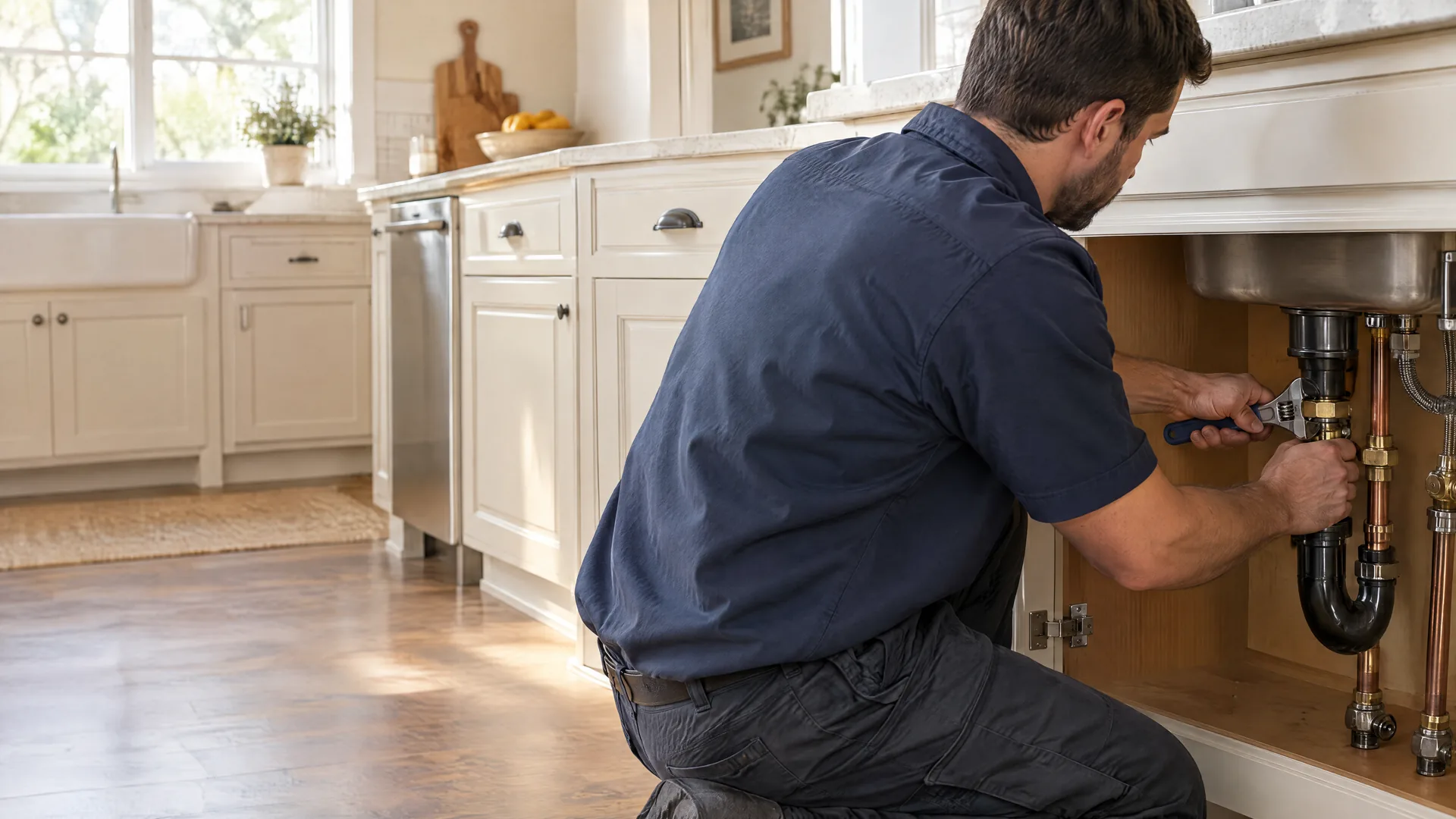
Water hammer in Hallettsville, TX is that sharp bang in the wall a half second after the washing machine stops filling. It is not the appliance. It is the water in your pipes hitting a closed valve and having nowhere to go. Water hammer is a real pressure event, not just a noise, and every bang puts stress on joints, fittings, and the appliances downstream. The good news is that the cause is mechanical and understandable, and the repair is usually straightforward. Here is what happens inside the pipe and what to do about it.
What Water Hammer Actually Is
Water is heavy and nearly impossible to compress. When it flows through a half-inch line, that moving column carries real momentum. Close the valve at the end slowly and the column slows down gradually. Close it in a fraction of a second, and all that momentum has to go somewhere in an instant.
What happens is a pressure spike. The column slams into the closed valve, pressure at that point jumps far above normal line pressure, and a shock wave travels back up the pipe at roughly the speed of sound in water. It bounces off the next change in the system and comes back. That is the bang, and sometimes a series of bangs.
Then the pipe itself moves. A line that is not firmly strapped to framing jumps against a joist or a stud, and that impact is the sound you actually hear through the wall.
Why Modern Appliances Made It Worse
Older fixtures used gate valves and compression faucets that closed gradually as you turned them. Almost nothing in a modern house does that.
Washing machines, dishwashers, ice makers, and automatic faucets use solenoid valves, which are electrically operated and slam shut the instant power drops. Single-lever faucets close quickly too. The faster the closure, the bigger the pressure spike, which is why water hammer usually shows up first on the washer line.
Where the Air Cushion Went
Homes were often plumbed with air chambers, which are capped vertical stubs of pipe above each fixture connection. The trapped air compresses when a pressure spike arrives and absorbs it, the way a shock absorber takes a bump.
Air chambers fail on their own schedule. Air slowly dissolves into the water passing by, the stub fills with water, and a water-filled chamber compresses nothing. That is why a house can be quiet for fifteen years and then start banging with no change to the plumbing at all.
A modern water hammer arrestor solves the same problem differently. It uses a sealed piston or bladder with a permanent gas charge, so there is no air to dissolve away. These are manufactured to a plumbing industry standard and install at the appliance connection; the IAPMO standards bodies publish the requirements they are built to.
A Scenario From a Hallettsville Utility Room
Picture a homeowner in Hallettsville who replaces a fifteen-year-old washing machine. Within a week, the wall behind the machine bangs on every fill cycle, something the old machine never did.
In a case like this, nothing has gone wrong with the plumbing. The new machine’s solenoid valve closes faster than the old one did, and the air chambers behind that wall likely waterlogged years ago without anyone noticing. The old washer’s slower valve was simply gentle enough to stay under the threshold. Add a faster valve and the same waterlogged system starts announcing itself.
The likely fix in a house like that is an arrestor at the washer connection, plus a check on the house pressure, because high static pressure makes every spike larger.
High House Pressure Multiplies the Problem
The size of a water hammer spike scales with how fast the water was moving, and velocity climbs with pressure. A house running well above normal supply pressure gets harder bangs and more damage from them.
A pressure reducing valve, the bell-shaped brass fitting where water enters the house, is what holds house pressure steady. When its internal diaphragm fails, pressure can drift upward, and the first symptoms are often banging pipes, dripping relief valves, and running toilet fill valves. The EPA’s WaterSense program covers household water use and the leaks that excess pressure tends to create.
What Actually Fixes Water Hammer
In order, from the simplest to the most involved:
- Install a water hammer arrestor at the offending appliance, usually the washer or dishwasher.
- Secure loose pipe. Adding or tightening straps stops the pipe from striking framing, which removes most of the audible bang.
- Drain the system to recharge original air chambers. Shut off the main, open the highest and lowest faucets, let everything drain, then close and refill. This often buys quiet for another stretch.
- Check and correct house pressure at the pressure reducing valve.
- Replace fixture stops that have gone stiff, since a partly seized valve creates turbulence of its own.
Model codes published by the International Association of Plumbing and Mechanical Officials address where arrestors are required on quick-closing valves, which is a good guide for where to start.
Safety: Why Banging Pipes Are Not Just Annoying
Each spike is a hydraulic impact on solder joints, threaded fittings, push-fit connections, and appliance valves. Over time that does real damage:
- Loosened joints in walls and ceilings, which turn into hidden leaks.
- Failed washing machine supply hoses, one of the most common sources of serious indoor water damage.
- Cracked toilet fill valves and worn faucet cartridges.
- Stress on the water heater’s connections and relief valve.
Replace rubber washing machine hoses with braided stainless steel, and shut the laundry valves off when you leave for an extended trip. A burst supply hose in an empty house is exactly the situation our emergency plumbing calls are made of.
When to Call a Plumber
Call when the banging is loud enough to shake a wall, when it happens at more than one fixture, or when it started after a pressure change or a repair. Those point at a system-wide cause rather than one appliance.
Also call if you see any of these alongside the noise: a relief valve dripping at the water heater, toilets that run for no reason, or a faucet that sprays oddly. Those are all signs of pressure above where it should be. Our plumbing services cover arrestor installation, pipe securing, and pressure regulator replacement across Hallettsville and the surrounding area.
Frequently Asked Questions
Can water hammer actually break a pipe?
A single event rarely does. Repeated spikes over months and years loosen joints and fatigue fittings, and the failure usually shows up at the weakest connection rather than in the middle of a pipe.
Why did my pipes start banging out of nowhere?
Most often the air chambers finally waterlogged, or something changed the closing speed of a valve. A new appliance, a repaired pressure regulator, or work on the supply line can all trigger it.
Will an arrestor fix banging at every fixture?
One arrestor solves one fast-closing valve. House-wide banging usually means excess pressure or unsecured piping, and those need a different fix.
Does water hammer happen on well systems too?
Yes. Any pressurized system with a fast-closing valve can produce it, and the pressure tank does not absorb a spike downstream of itself.
Your Next Step
If water hammer is banging the walls in your Hallettsville home, note which appliance triggers it and whether it happens anywhere else, then call Hallettsville Plumbers to schedule a visit. We will check the pressure at the house, install arrestors where they belong, and secure the lines so the noise stops for good.