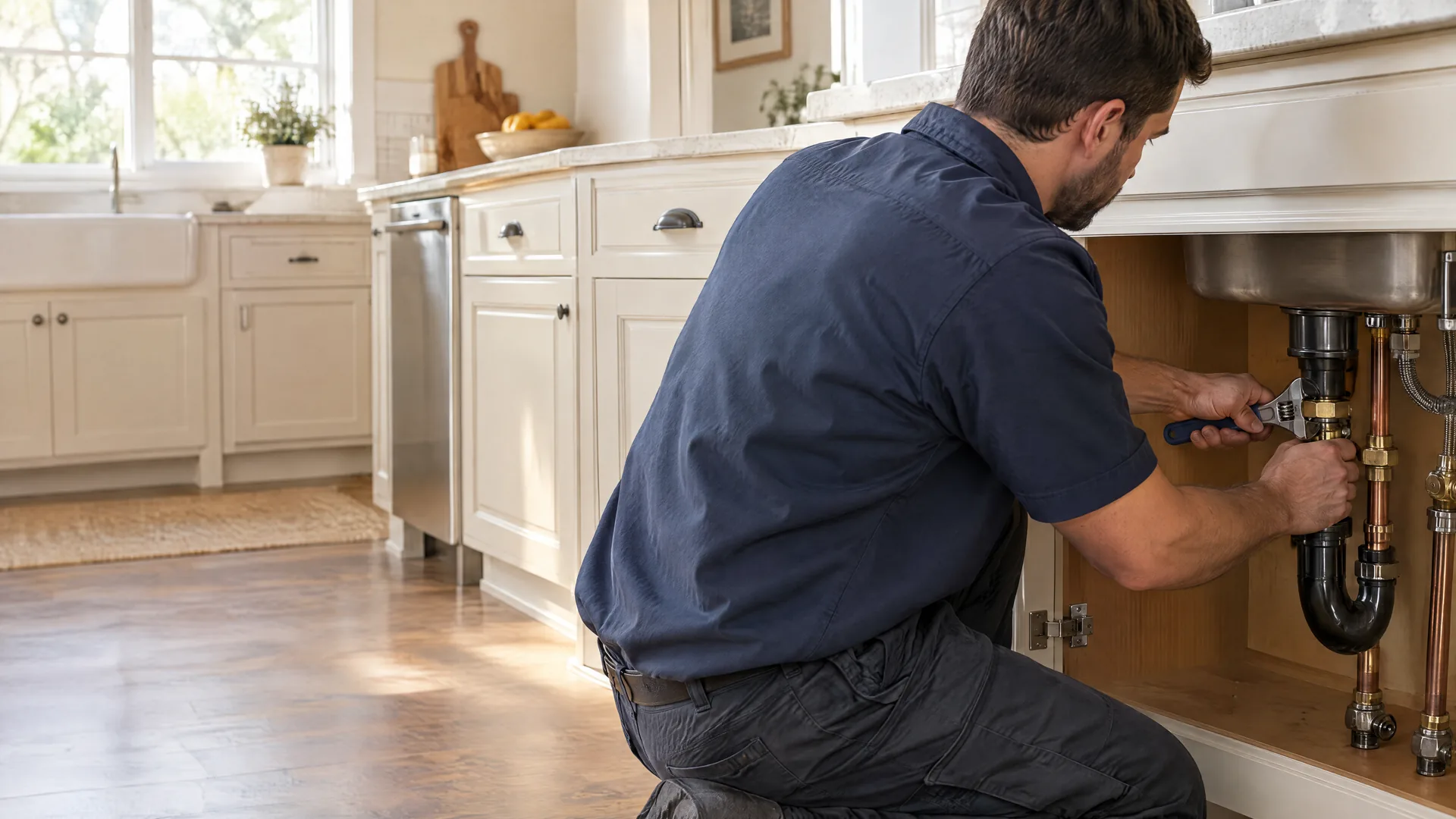
Low water pressure in Hallettsville, TX is one of those problems that builds so slowly you stop noticing it. Then a guest comments on the shower, or the washing machine takes twice as long to fill, and suddenly it is obvious. In almost every case, low water pressure comes from one of three things: a restriction inside your pipes, a control device that has failed, or a supply source that cannot keep up with demand. The trick is telling those apart before anyone starts opening walls. Here is how the system is supposed to work, what goes wrong, and how we track it down in Lavaca County homes.
Pressure and Flow Are Not the Same Thing
Pressure is the push behind the water. Flow is how much actually comes out of the fixture in a minute. You can have full pressure and terrible flow if the path is narrowed somewhere, and homeowners almost always describe both as low water pressure.
That distinction matters because it points at different parts. A true pressure drop affects the whole house at once, including outdoor spigots. A flow problem tends to show up at one or two fixtures while everything else behaves normally. The first thing we do on a service call is check an outside hose bib, because that connection usually sits upstream of everything else in the house.
What Physically Causes Low Water Pressure
Water moving through a pipe loses energy to friction against the pipe wall. Anything that roughens or narrows that wall robs pressure at the far end. Three mechanisms cause most of what we see:
- Mineral scale. Groundwater across this part of Texas carries dissolved calcium and magnesium. As water sits in a warm line, those minerals drop out of solution and bond to the pipe wall, aerator screens, and shower heads.
- Galvanized pipe corrosion. Older galvanized steel lines rust from the inside out and build a layer of rough scale that can close a half-inch pipe down to the diameter of a pencil.
- Debris. Sand, well grit, or fragments of an old rubber supply hose collect at the smallest opening in the path, which is usually a faucet cartridge or an aerator screen.
The U.S. Geological Survey explains how groundwater picks up dissolved minerals on its way through rock, and that chemistry is the root of most scale problems here.
One Fixture or the Whole House?
Run this test before you call anyone. Open a bathroom sink, then a tub spout, then an outdoor spigot, one at a time.
If only one fixture is weak, the restriction is at that fixture: an aerator packed with scale, a clogged cartridge, or a supply valve under the sink that is not all the way open. If everything in the house is weak, the problem is upstream at the main line, the regulator, or the supply itself. That single test cuts the search in half.
The Pressure Regulator and the Main Shutoff
Homes on a municipal line usually have a pressure reducing valve, often called a PRV, mounted where the water enters the house. It is a bell-shaped brass fitting with an adjustment screw on top. Inside it, a spring pushes against a rubber diaphragm to hold outgoing pressure steady no matter what the street does.
That diaphragm is rubber, and rubber ages. When it tears or the spring weakens, the valve drifts and can choke the flow to the whole house. A failing regulator is one of the most common causes of house-wide low water pressure that appeared over a few months rather than overnight.
Also check the main shutoff. A gate valve that was partially closed during a repair and never reopened will quietly starve the entire house.
Well Systems Around Lavaca County Work Differently
Plenty of properties around Hallettsville, Sweet Home, and Ezzell run on a private well, and those systems create low water pressure in their own ways. A well uses a pressure tank with an air charge on one side of a bladder and water on the other. The air cushion is what holds pressure between pump cycles.
When the bladder ruptures or the air charge bleeds off, the tank becomes waterlogged. The pump then short cycles, pressure swings hard while you shower, and flow feels weak at the tap. A worn pressure switch produces similar symptoms.
The well, the pump, and the pressure tank are a well contractor’s work. Everything downstream of that tank, including the house piping and fixtures, is ours. Texas A&M AgriLife Extension publishes well owner resources worth keeping on hand if your home runs on groundwater.
A Scenario From a Hallettsville Kitchen
Picture a Hallettsville homeowner whose kitchen faucet has gone weak while the bathrooms are fine. Hot is worse than cold. Nothing was touched before it started.
Here is what is usually happening. Hot water carries more dissolved mineral out of solution as it cools in the line, so the hot side scales faster. That scale breaks loose in flakes and lands in the aerator screen at the tip of the faucet. Unscrew the aerator and you will likely find it packed with white and tan grit. That single part explains most one-fixture complaints in homes with hard water, and a water treatment system is what keeps it from coming back.
Safe Checks Before You Call
These steps are safe for any homeowner and they speed up the visit:
- Unscrew and rinse the aerator on the weak faucet, then reinstall it and test again.
- Confirm the main shutoff and each fixture stop valve are fully open.
- Note whether hot, cold, or both are weak, since hot-only points toward the water heater or the hot side piping.
- Write down when the change started and whether it was gradual or sudden.
Do not adjust the screw on a pressure regulator by feel. Raising house pressure too far stresses supply lines, toilet fill valves, and water heater connections, and a burst line does far more damage than a slow shower ever will. The EPA’s WaterSense program has good background on household water use and leaks.
When to Call a Plumber
Call us when the whole house is weak, when pressure changes suddenly with no explanation, or when you have rust-colored water along with weak flow. Sudden house-wide low water pressure with wet ground in the yard can mean a broken service line, and that one should not wait.
Repiping a galvanized system, replacing a regulator, and diagnosing a hot-side restriction all require shutting down and opening the supply. Our plumbing services cover that work across Hallettsville and the surrounding communities.
Frequently Asked Questions
Why is my water pressure fine in the morning and weak in the evening?
That pattern usually points at demand rather than a defect. On a shared line or a well serving more than one household, peak use pulls pressure down at the same time every day.
Can a water heater cause low water pressure?
It can, on the hot side only. Scale builds inside the tank and at the outlet nipple, and a deteriorating dip tube can shed plastic fragments that lodge in fixture screens.
Does low water pressure mean I have a leak?
Not always, but it is worth ruling out. A hidden leak large enough to drop house pressure usually also shows up as a soggy spot, a warm floor, or a meter that keeps moving with everything shut off.
Will a water treatment system help with pressure?
It helps prevent the problem from returning. Treating hard water keeps new scale from forming in pipes, fixtures, and the water heater, though it will not remove buildup that is already there.
Your Next Step
If low water pressure has crept into your Hallettsville home, run the fixture-by-fixture test above, note what you find, and call Hallettsville Plumbers to schedule a diagnosis. We serve Hallettsville and the surrounding Lavaca County area, and we find the restriction before recommending any repair.