Kitchen Plumbing Problems Every Hallettsville Homeowner Faces
Your kitchen is the hardest-working room in your Hallettsville home, and the plumbing takes the brunt of it. Kitchen plumbing in Hallettsville handles everything from daily dish washing to holiday meal prep, and that constant use leads to problems that every homeowner encounters sooner or later. Understanding the most common kitchen plumbing issues helps you catch small problems before they become expensive emergencies.
From dripping faucets that drive up your water bill to garbage disposals that quit mid-meal, kitchen plumbing failures never happen at a convenient time. This guide covers the issues Hallettsville homeowners face most often, what you can handle yourself, and when it is time to call a professional plumber.
Leaky Faucets and Why They Matter
A dripping kitchen faucet seems minor, but it wastes more water than most people realize. A faucet that drips once per second wastes over 3,000 gallons per year according to the EPA WaterSense program. In a small Texas town like Hallettsville where water conservation matters, fixing a leaky kitchen faucet should be a priority.
Common Causes of Faucet Leaks
Most kitchen faucet leaks come from worn O-rings, corroded valve seats, or deteriorated washers. Single-handle faucets often develop leaks around the base when the cartridge wears out. Two-handle models typically drip from the spout when internal washers fail. Hard water in the Hallettsville area accelerates this wear by depositing minerals that grind against moving parts every time you turn the handle.
DIY Fix or Professional Repair
Replacing an O-ring or washer is a manageable DIY project if you have basic tools and can identify your faucet brand. However, if the faucet continues leaking after replacing internal parts, the valve seat may be damaged and require professional kitchen sink repair. A plumber can also advise whether repair or faucet replacement makes more financial sense for older fixtures.
Slow Drains and Persistent Clogs
Kitchen drains handle grease, food particles, soap residue, and everything else that goes down the sink. Over time, buildup narrows the drain pipe and water starts backing up. Slow kitchen drains are one of the most frequent plumbing complaints from Hallettsville homeowners, especially after holidays and family gatherings when kitchen use spikes.
What Causes Kitchen Drain Clogs
Grease is the number one culprit. Cooking oil and grease feel liquid when hot but solidify inside pipes as they cool, creating a sticky layer that traps food particles. Starchy foods like pasta and rice expand with water and create blockages. Coffee grounds, eggshells, and fibrous vegetable scraps compound the problem when they accumulate in the P-trap or further down the line.
Prevention and Cleaning Tips
Preventing clogs impacts nothing and saves significant repair bills over time. Simple daily habits keep kitchen drains flowing freely year-round.
- Never pour cooking grease or oil down the drain. Collect it in a container and dispose of it in the trash.
- Run hot water for thirty seconds after each use to flush residue through the pipes.
- Use a drain strainer to catch food particles before they enter the plumbing.
- Pour a mixture of baking soda and vinegar down the drain monthly to break up buildup.
Garbage Disposal Problems
Garbage disposals make kitchen cleanup faster, but they also introduce a common source of plumbing headaches. Hallettsville homeowners rely on their disposals daily, and when one stops working, the disruption affects every meal.
Jammed and Humming Disposals
When a disposal hums but the blades do not spin, something is jamming the flywheel. Turn off the power, use the hex key slot on the bottom of the unit to manually rotate the flywheel, and remove the obstruction with tongs. Never put your hand inside a garbage disposal even when the power is off. If the unit does not hum at all, check the reset button on the bottom of the unit and verify the circuit breaker has not tripped.
When to Replace Your Disposal
A garbage disposal that frequently jams, leaks from the bottom housing, or fails to grind food effectively has likely reached the end of its useful life. Most disposals last eight to twelve years with proper use. Replacing an old unit with a newer, more powerful model often impacts less than repeated repairs and gives you quieter, more efficient performance.
Dishwasher Connection Issues
Your dishwasher connects to both the water supply and the drain system, creating two potential failure points. Leaks at the supply line or drain hose can cause water damage to cabinets and flooring that goes unnoticed for weeks because the connections hide behind the unit.
Signs of Dishwasher Plumbing Problems
Water pooling under or around your dishwasher indicates a connection issue. A dishwasher that does not drain completely may have a kinked drain hose or a clogged air gap. Musty smells coming from the dishwasher area often signal standing water trapped in a faulty drain connection. Check the supply line and drain hose connections every six months to catch problems early.
Under-Sink Leaks
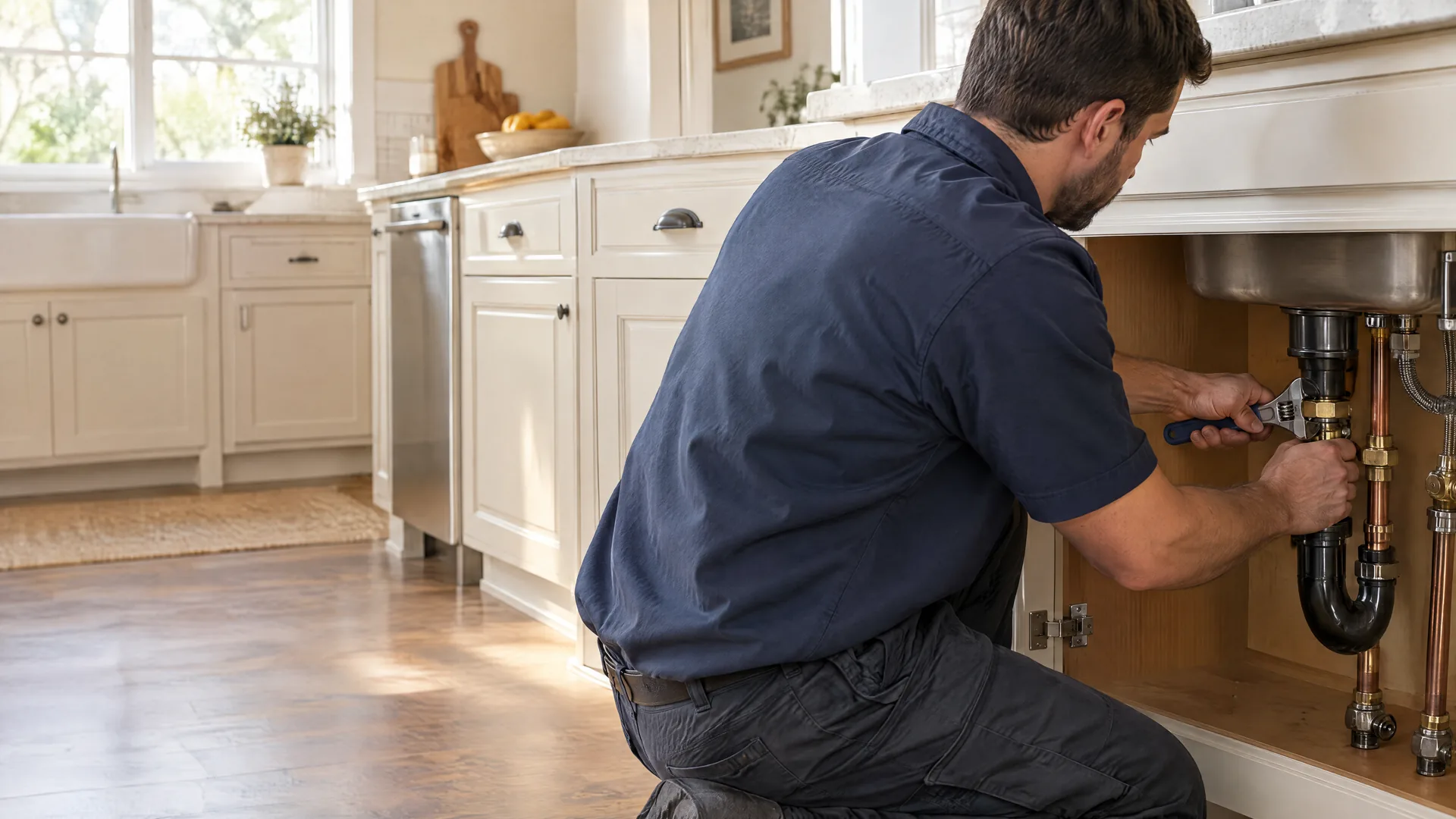
The cabinet under your kitchen sink hides a network of pipes, connections, and fittings that can develop leaks at any point. Many Hallettsville homeowners discover under-sink leaks only when stored items get wet or mold appears on the cabinet floor.
Checking for Hidden Leaks
Open your under-sink cabinet and inspect it monthly. Look for water stains, warped wood, mineral deposits on pipe connections, and any dampness on the cabinet floor. Run both hot and cold water while watching the connections for drips. Check the sprayer hose connection and the garbage disposal mount as well since both are common leak sources.
Frequently Asked Questions
How do I unclog a kitchen drain in Hallettsville without chemicals?
Start with boiling water poured directly down the drain. If that does not work, pour half a cup of baking soda followed by half a cup of white vinegar, wait fifteen minutes, then flush with hot water. For stubborn clogs, use a drain snake to physically break up the blockage. Avoid chemical drain cleaners as they can damage pipes over time.
How often should I have my kitchen plumbing inspected?
Annual plumbing inspections catch small problems before they become emergencies. If your home is older than thirty years, consider inspections every six months since aging pipes and fittings deteriorate faster. A professional inspection covers supply lines, drain connections, shut-off valves, and appliance hookups.
Why does my kitchen sink smell bad even when it is clean?
Bad smells usually come from food buildup in the garbage disposal or the P-trap drying out. Run the disposal with cold water and ice cubes to clean the grinding chamber. If the sink sits unused for extended periods, the P-trap water seal can evaporate and allow sewer gas to enter your kitchen. Running water for a minute refills the trap and eliminates the odor.
When should I call a plumber for kitchen plumbing issues?
Call a professional when you have persistent leaks after attempting repairs, recurring drain clogs that come back within days, low water pressure at the kitchen faucet, or any signs of water damage to cabinets or flooring. Slab leaks and main line issues also require professional equipment and expertise.
Get Expert Kitchen Plumbing Help in Hallettsville
Kitchen plumbing problems do not fix themselves, and waiting only makes them worse. Hallettsville Plumbing provides fast, reliable kitchen plumbing repair for homeowners throughout Hallettsville and the surrounding area. From leaky faucets and slow drains to garbage disposal replacement and dishwasher connections, our licensed plumbers handle it all. Contact Hallettsville Plumbing today to schedule your repair and get your kitchen back in working order.